
Baltimore, MD

Use Create Your Own City Chart to see additional financial, demographic, and economic data for this and other cities.

 
Baltimore owes more than it owns.
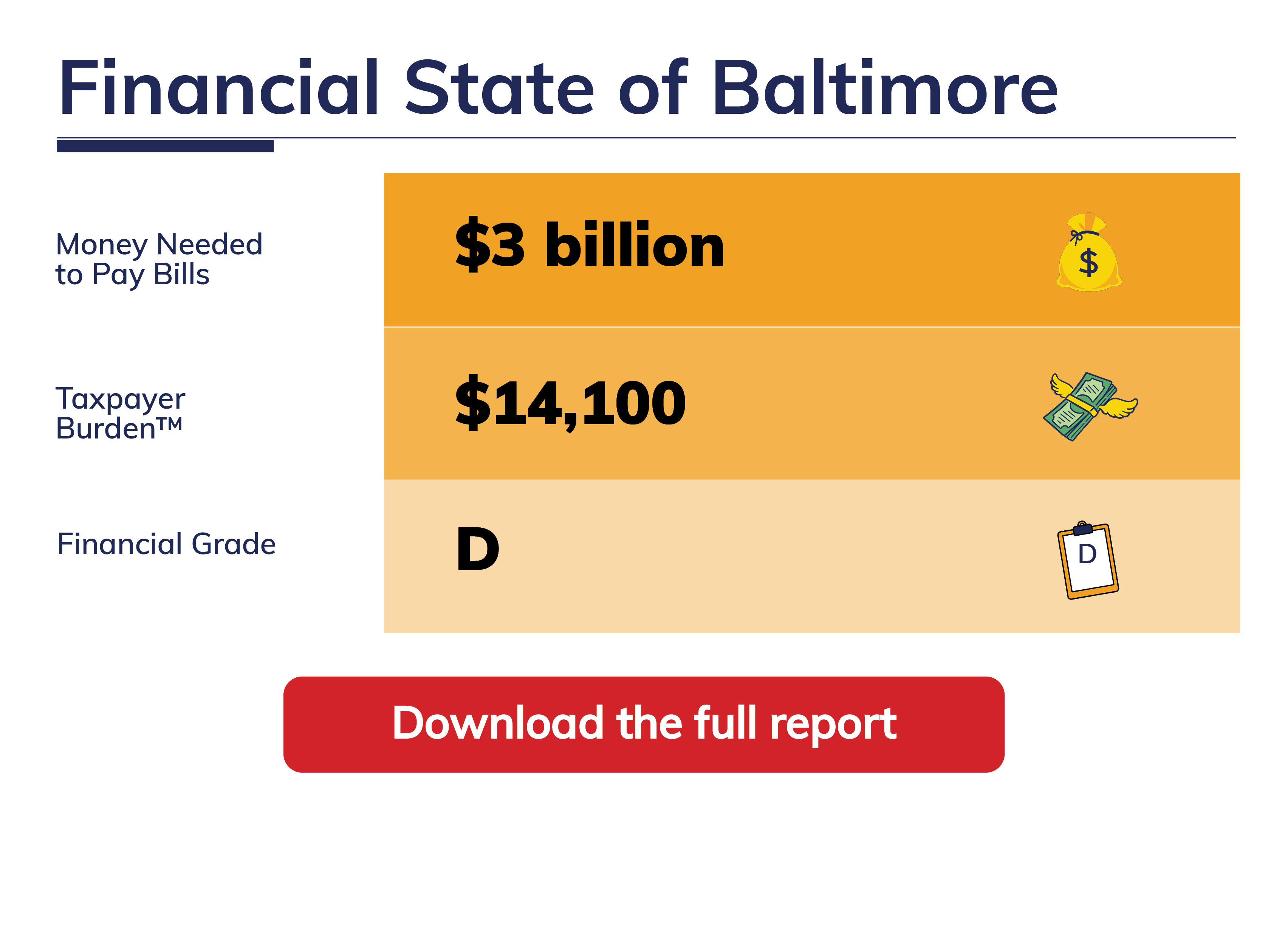
Baltimore has a -$14,100 Taxpayer Burden.™
Baltimore is a Sinkhole City without enough assets to cover its debt.
Decisions by elected officials have created a Taxpayer Burden™, which is each taxpayer's share of city bills after its available assets have been tapped.
TIA's Taxpayer Burden™ measurement incorporates all assets and liabilities, including retirement obligations.
Baltimore only has $3.6 billion of assets available to pay bills totaling $6.1 billion.
Because Baltimore doesn't have enough money to pay its bills, it has a -$3 billion financial hole. To erase this shortfall, each Baltimore taxpayer would have to send -$14,100 to the city.
Expense growth outpaced revenue growth, while the police and fire pension system was only about 65 percent funded.
The city's financial report was released 184 days after its fiscal year end, which is considered untimely according to the 180 day standard.

IN THE NEWS
Baltimore Audit Finds a Bigger Problem Than Any Single Finding: Weak Controls Across the City

SEPTEMBER 8, 2026

Baltimore’s 2025 Single Audit points to a broader problem than any one accounting error or compliance issue. Across the city’s finances, auditors repeatedly found the same underlying weaknesses: late reviews of account balances, fragmented responsibilities across departments, weak monitoring, and internal controls that failed to catch problems before year-end. Those breakdowns affected everything from cash and grant reporting to utility billing and cybersecurity.

VIEW LESS