
California
| California owes more than it owns. |
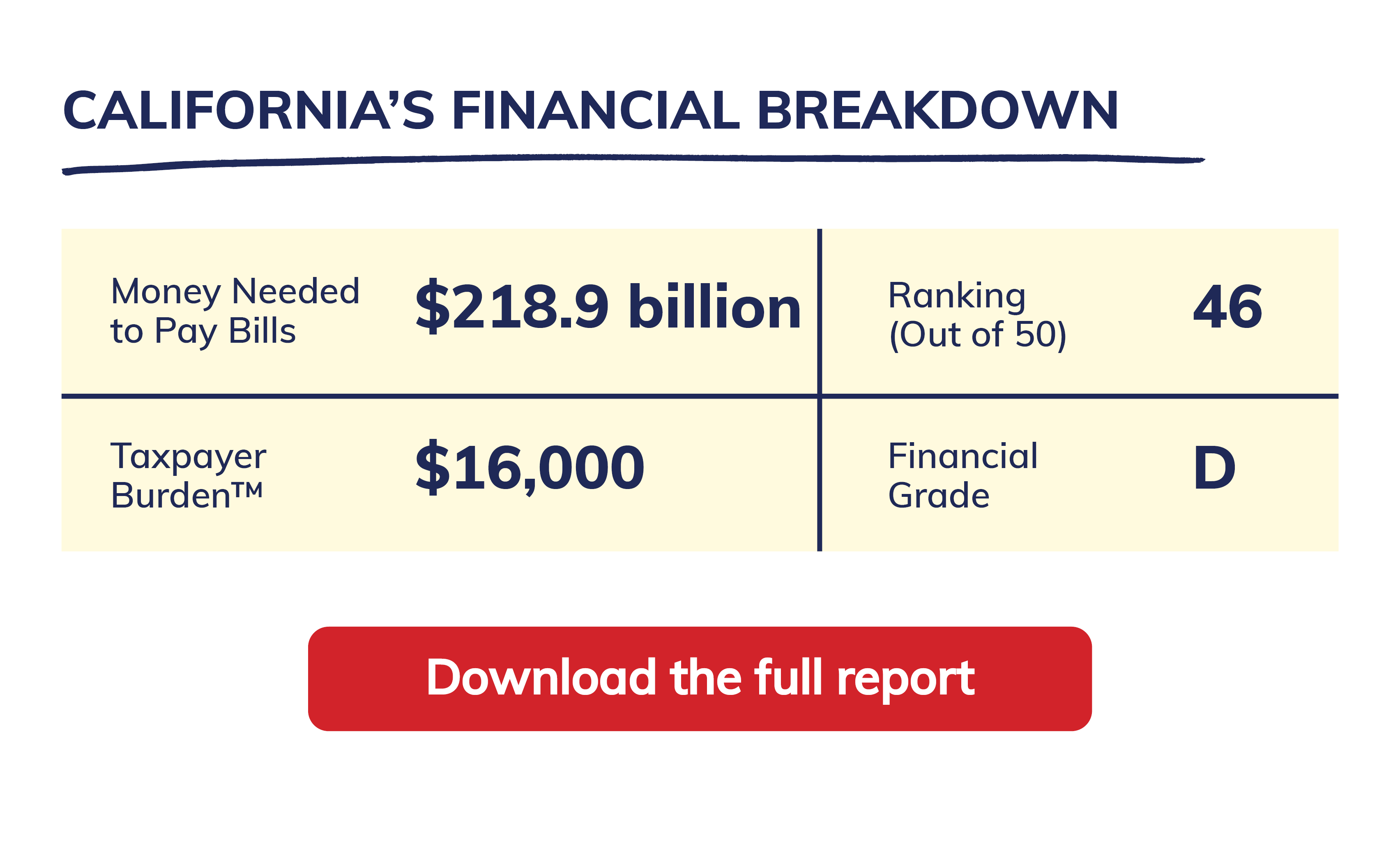
| California has a -$16,000 Taxpayer Burden.™ |
| California is a Sinkhole State without enough assets to cover its debt. |
| Elected officials have created a Taxpayer Burden™, which is each taxpayer's share of state bills after its available assets have been tapped. |
| TIA's Taxpayer Burden™ measurement incorporates both assets and liabilities, not just pension debt. |
| California only has $267.5 billion of assets available to pay bills totaling $486.4 billion. |
| Because California doesn't have enough money to pay its bills, it has a -$218.9 billion financial hole. To fill it, each California taxpayer would have to send -$16,000 to the state. |
| California's reported net position is overstated by $7.8 billion, largely because the state delays recognizing losses incurred when the net pension liability increases. |
| The state's financial report was released 316 days after its fiscal year end, which is considered untimely according to the 180 day standard. |
Prior Years' TIA Reports
2024 Financial State of California
2023 Financial State of California
2022 Financial State of California
2021 Financial State of California
2020 Financial State of California
2019 Financial State of California
2018 Financial State of California
2017 Financial State of California
2016 Financial State of California
2015 Financial State of California
2014 Financial State of California
2013 Financial State of California
2012 Financial State of California
2011 Financial State of California
City and Municipal Reports
Financial State of Bakersfield
Financial State of Chula Vista
Financial State of Los Angeles
Financial State of San Francisco
Other Resources
California Annual Comprehensive Financial Reports
Publishing Entity: California State Controller's Office
